Classic Spinach & Cheese Omelette
Fluffy, perfectly cooked omelette filled with fresh spinach and melted cheese. A protein-packed breakfast or brunch that's ready in just 10 minutes.

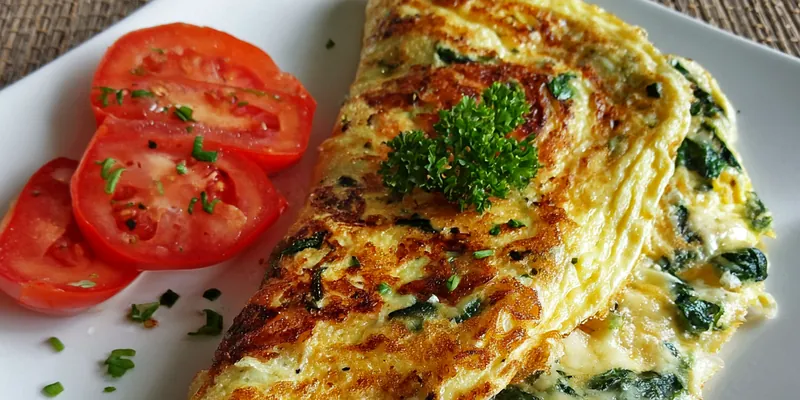
The Art of the Perfect Omelette
A perfect omelette is one of the fundamental skills of French cooking, requiring just the right balance of heat, timing, and technique. The eggs should be creamy and custardy, never rubbery or dry, while the filling provides complementary flavors and textures without overwhelming the delicate eggs.
The key to success lies in understanding heat control and movement. Too high heat will set the bottom too quickly while leaving the top raw, while too low heat will result in tough, overcooked eggs. The gentle stirring and tilting motion allows for even cooking and the signature creamy texture.
💡 Professional Tip
Use medium-low heat and be patient. The entire cooking process should take 4-5 minutes. If the bottom is setting too quickly, remove the pan from heat for a moment to let the temperature equalize.
Frequently Asked Questions
An 8-10 inch non-stick or well-seasoned carbon steel pan works best. The pan should be the right size so the eggs aren't too thick or too thin, and the non-stick surface makes folding easier.
The edges should be set but the center should still be slightly wet and creamy. It will continue cooking from residual heat after folding. Better to undercook slightly than overcook.
Fresh spinach is preferred for texture, but you can use frozen. Thaw completely and squeeze out all excess water before using, or it will make the omelette watery.
Gruyere, Swiss, sharp cheddar, goat cheese, or feta all work wonderfully. Choose cheeses that melt well and complement the spinach. Avoid pre-shredded cheese if possible - fresh grated melts better.
Don't overcook the eggs - they should still be slightly creamy. Use a thin, flexible spatula and fold gently. Practice makes perfect with omelette folding technique.
Yes, but cook them first to remove excess moisture. Mushrooms, bell peppers, tomatoes (seeded), or herbs all work well. Don't overfill or the omelette will be difficult to fold.
Omelettes are best eaten fresh, but you can gently reheat in a low oven or microwave at 50% power. They won't have the same texture as when first made.
It's better to make individual omelettes rather than trying to make one large one. The technique works best with 2-3 eggs per omelette in the proper sized pan.
Recipe Troubleshooting Guide
Rubbery Eggs
Problem: Omelette turns out tough and rubbery
Solution: Lower the heat and don't overcook. Eggs should remain creamy. Remove from heat as soon as they're set but still slightly wet on top.
Sticking to Pan
Problem: Omelette sticks to the pan and tears
Solution: Use enough butter or oil, ensure pan is properly heated, and use a good non-stick or well-seasoned pan. Don't try to move the omelette too early.
Watery Omelette
Problem: Omelette has water pooling around it
Prevention: Squeeze excess water from spinach before adding, don't overfill with vegetables, and ensure vegetables are pre-cooked to remove moisture.
Won't Fold Properly
Problem: Omelette breaks or won't fold neatly
Recovery: Don't overcook the eggs, use a thin flexible spatula, and fold gently from one side. The eggs should still be slightly creamy when folding.
Uneven Cooking
Problem: Some parts are overcooked while others are raw
Prevention: Keep the pan moving, gently push cooked edges toward center, and tilt pan to distribute uncooked egg. Maintain consistent medium-low heat.
Flavor Balance Issues
Too Sweet: This shouldn't be an issue with this savory recipe
Too Salty: Reduce salt in eggs or choose a milder cheese
Bland: Season eggs well, use flavorful cheese, add fresh herbs or a pinch of nutmeg
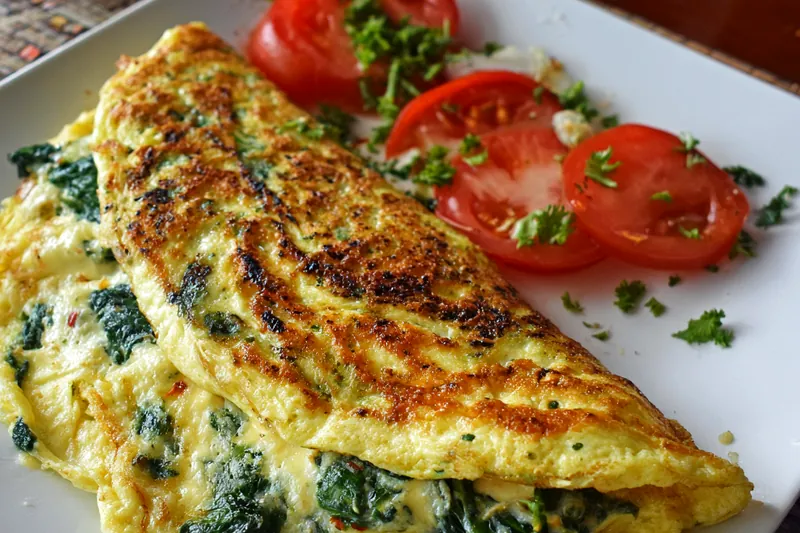
Choosing Quality Ingredients
The beauty of a great omelette lies in the quality of its simple ingredients. Fresh eggs with bright orange yolks create the richest flavor and most beautiful color, while farm-fresh eggs often have stronger shells and better texture when cooked.
Fresh baby spinach wilts quickly and has the most delicate flavor and texture. Avoid large, tough spinach leaves that can be stringy. The cheese should be freshly grated for the best melting properties and flavor - pre-shredded cheese often contains anti-caking agents that affect melting.
Essential Ingredient Notes
- Egg Freshness: Use the freshest eggs possible - they hold together better and have more flavor. Eggs should have firm whites and bright, high-standing yolks.
- Spinach Selection: Choose tender baby spinach leaves that are bright green with no yellowing or wilting. Wash and dry thoroughly to remove any grit or excess moisture.
- Cheese Quality: Grate cheese fresh from a block for better melting. Room temperature cheese melts more easily and evenly than cold cheese straight from the fridge.

Mastering Omelette Technique
The classic French omelette technique involves constant gentle movement of the pan and spatula to create small, creamy curds rather than large, tough ones. The motion should be fluid - stirring the eggs while simultaneously tilting the pan to distribute uncooked egg to the bottom.
Temperature control is absolutely crucial. The pan should be warm enough that the butter foams but doesn't brown. If you hear aggressive sizzling when you add the eggs, the pan is too hot. The goal is gentle, even cooking that results in a creamy, custard-like texture.
The Perfect Fold
When the eggs are just set but still slightly creamy on top, add filling to one half, then use a spatula to gently fold the empty half over the filled half. The residual heat will finish cooking the eggs perfectly.
Classic Spinach & Cheese Omelette
📋 Ingredients
For the Omelette
- 60g fresh baby spinachChopped, excess moisture removed
- 60g cheese, gratedGruyere, cheddar, or Swiss work well
- 1 small shallot, mincedOptional for extra flavor
- 1 clove garlic, mincedOptional aromatic element
- Fresh chives for garnishAdds color and mild onion flavor
For the Filling
- 3 large eggsFresh, room temperature preferred
- 30ml whole milk or creamMakes eggs creamier
- 15g butterFor cooking and flavor
- 1/2 tsp saltEssential for flavor
- 1/4 tsp black pepperFreshly ground preferred
- Pinch of nutmegOptional classic French touch
Instructions
Prepare Eggs
Crack eggs into a bowl and whisk with milk, salt, pepper, and a pinch of nutmeg if using. Whisk vigorously until light and frothy, about 30 seconds.
Prepare Filling
If using shallot and garlic, heat a small amount of butter in the omelette pan and sauté briefly until fragrant. Add chopped spinach and cook for 1-2 minutes until wilted. Remove from pan and set aside.
Heat Pan
Heat an 8-10 inch non-stick or well-seasoned pan over medium-low heat. Add butter and swirl to coat the bottom and sides completely.
Cook Eggs
Pour in beaten eggs. Using a spatula, gently push cooked edges toward center while tilting pan to let uncooked egg flow underneath. Continue for 2-3 minutes until eggs are almost set but still slightly creamy on top.
Add Filling
Sprinkle cheese over half of the omelette, then add the cooked spinach on top of the cheese. The residual heat will melt the cheese.
Fold and Serve
Using a spatula, carefully fold the omelette in half over the filling. Slide onto a warm plate, garnish with fresh chives, and serve immediately.
Recipe Notes & Tips
Serving Tips
Serve immediately on a warmed plate for best texture and temperature. Pair with toast, fresh fruit, or a simple side salad for a complete breakfast or brunch.
Technique Notes
The key to a perfect omelette is gentle heat and patience. Don't rush the process - it's better to undercook slightly than overcook. The eggs will continue to cook after folding.
Variations
Try different cheese combinations like goat cheese and herbs, or add diced tomatoes (seeded), mushrooms, or bell peppers. Fresh herbs like dill, parsley, or tarragon make excellent additions.